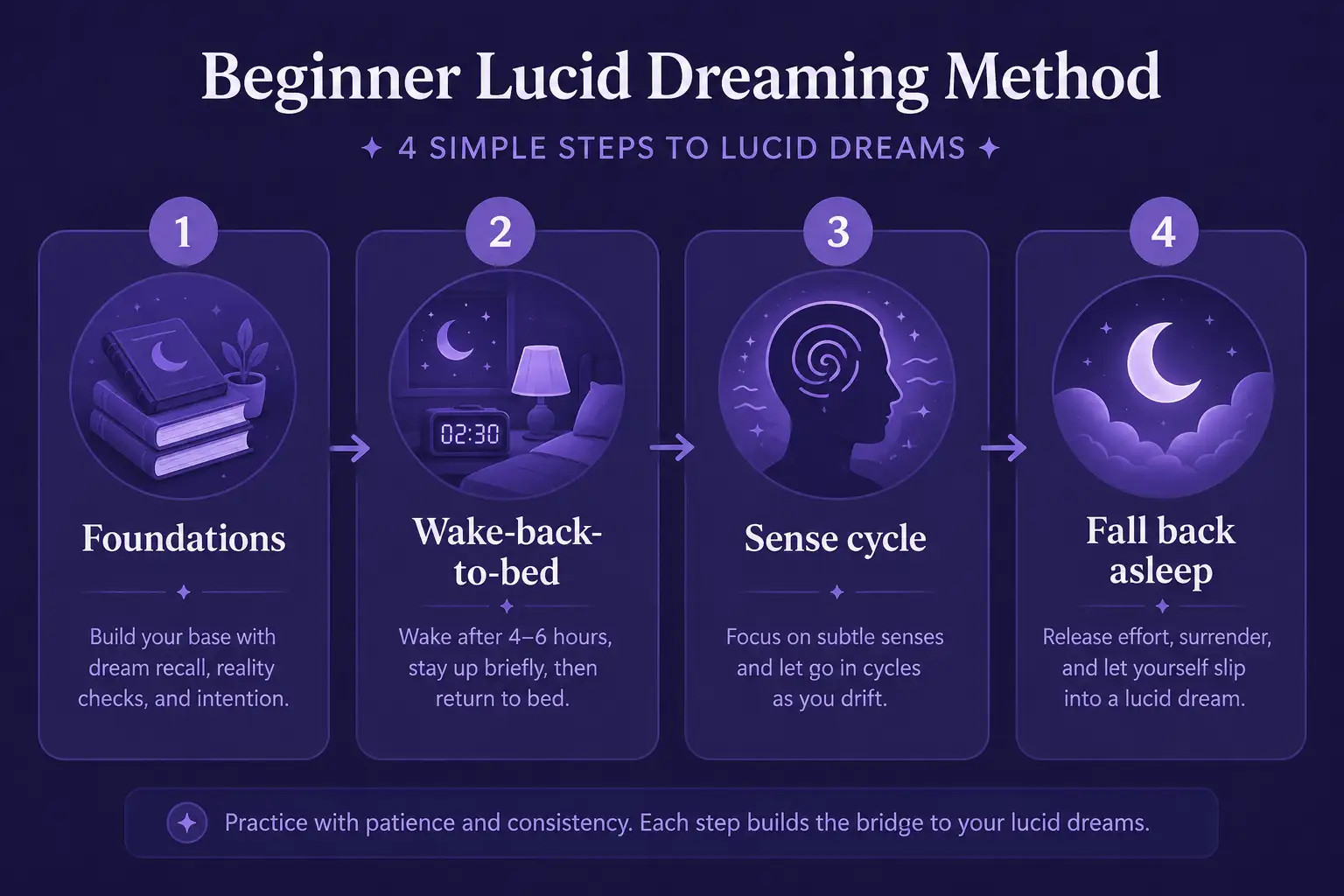
Have you ever wanted to fly through the stars, revisit a favorite memory, or practice a real-world skill while you sleep? Lucid dreaming—the state of becoming aware that you are dreaming while still in the dream—is no longer just the stuff of science fiction.
As we move into 2026, the convergence of cognitive neuroscience and sleep technology has turned “lucid dreaming” from an esoteric hobby into a mainstream tool for mental optimization. But for most beginners, the biggest question is: How can I do it tonight?
While mastering lucidity is a skill that rewards consistency, you can significantly “hack” your success rate using the right induction protocols. Here is the definitive playbook on how to lucid dream fast.

1. The Foundation: Level Up Your Dream Recall
You cannot have a lucid dream if you don’t remember your dreams in the first place. This is the “Step 0” that most people skip.
- The Dream Journal: Keep a notebook or a dedicated app (like Oniri) by your bed. The moment you wake up, write down every fragment you remember. This signals to your brain that dreams are important information worth retaining.
- The “Stay Still” Rule: When you wake up, do not move. Moving your physical body triggers the “waking” centers of the brain and erases the fragile memory of the dream state.
2. The Multiplier: Wake Back to Bed (WBTB)
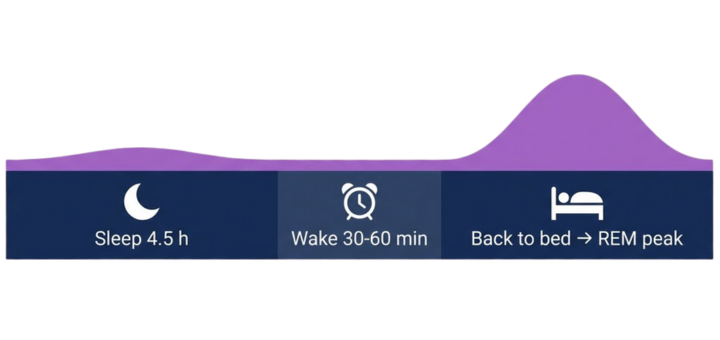
If you want to achieve lucidity fast, the Wake Back to Bed technique is your most powerful ally. It works by interrupting your sleep cycle to ensure you return to bed during a period of high REM (Rapid Eye Movement) density.
- Set an alarm for 4 to 6 hours after you go to sleep.
- Stay awake for 20–60 minutes.
- Engage in a “lucidity-focused” activity: read a book about dreaming or browse a forum like r/LucidDreaming.
- Go back to sleep with the intent to become aware.
3. The Gold Standard: Mnemonic Induction of Lucid Dreams (MILD)
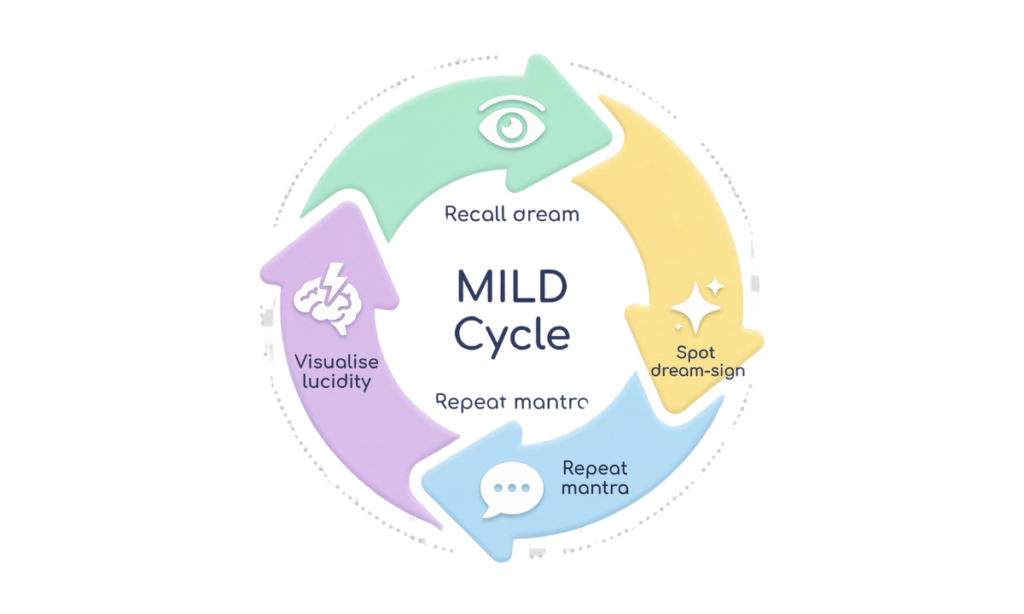
Developed by Dr. Stephen LaBerge, MILD is the most scientifically validated method for fast results. It relies on prospective memory—the ability to remember to do something in the future.
- As you fall back to sleep (ideally during a WBTB session), visualize a recent dream.
- Find a “dream sign” (something surreal or impossible).
- Repeat a mantra: “Next time I’m dreaming, I will remember that I’m dreaming.”
- Visualize yourself becoming lucid when you see that dream sign.

4. The “Cheat Code”: Senses Initiated Lucid Dream (SSILD)
SSILD is a modern technique that has gained massive popularity for its high success rate with beginners. It involves “priming” your senses to be extra-sensitive to the transition into the dream state.
While lying in bed, cycle your attention through:
- Sight: Look at the back of your eyelids for 20 seconds.
- Hearing: Listen for internal or external sounds for 20 seconds.
- Touch: Feel the weight of the blankets or the temperature of the air for 20 seconds.
Repeat this cycle 4–6 times. This “calibrates” your awareness, making it much more likely that you will notice the strange sensations of a dream.

5. Reality Testing: The “Critical” Mindset
To lucid dream, you must train your brain to question reality while you are awake so that the habit carries over into your sleep.
Don’t just mindlessly check your watch. Truly ask yourself: “Am I dreaming right now?” Look for “glitches.”
- The Nose Pinch: Can you breathe through a pinched nose? (In a dream, you can).
- The Palm Push: Can you push your fingers through your opposite palm?
- Digital Text: Look at a clock or a line of text, look away, and look back. In dreams, text almost always changes.
Strategic Tips for 2026: Enhancing Your Practice
- Leverage Sleep Tech: The market for lucid dreaming devices is booming. EEG-based masks can now detect when you enter REM sleep and provide subtle light or sound cues (Targeted Lucidity Reactivation) to “nudge” you into awareness without waking you up.
- The Role of Galantamine: For those looking for a pharmacological boost, Galantamine is the only clinically verified supplement shown to increase lucidity frequency—though it should only be used occasionally and after consulting a professional.
- Mindfulness Matters: Studies show that people who practice daytime meditation have a higher “lucidity baseline.” A calm, focused mind is far more likely to recognize the subtle shift into a dream.
Final Thoughts: Is It Worth It?
Lucid dreaming is more than just a “nightly video game.” It is a safe, natural way to explore the architecture of your own mind. While some dedicated practitioners achieve their first dream in a few days, most find success within 2 to 8 weeks of consistent practice.
Start tonight. Journal your first fragment, set your WBTB alarm, and prepare to wake up inside your imagination.
Can you lucid dream in one night?
Yes. While mastery takes time, using the SSILD (Senses Initiated Lucid Dream) technique combined with WBTB (Wake Back to Bed) significantly increases the chance of a beginner experiencing lucidity during their first attempt.
What is the easiest lucid dream technique for beginners?
The MILD (Mnemonic Induction of Lucid Dreams) technique is widely considered the easiest because it relies on “prospective memory” (setting an intention) rather than complex physical maneuvers or supplements.
Is lucid dreaming dangerous?
For the vast majority of people, lucid dreaming is a safe, natural phenomenon. It is essentially a hybrid state of consciousness where the brain’s logical center (prefrontal cortex) “wakes up” while the body remains in REM sleep.
To dive deeper into the psychological aspects of your dreams, explore this guide on lucid dream meaning and what it really tells you about your mind to better understand the architecture of your subconscious.
Frequently Asked Questions (FAQ)
A: According to community data and sleep laboratory studies, dedicated practitioners typically achieve their first lucid dream within 2 to 8 weeks. However, using “multiplier” techniques like WBTB can trigger an experience much faster, often within the first few days of practice.
A: WBTB is a strategy where you set an alarm for 4–6 hours after falling asleep, stay awake for 20–60 minutes, and then return to sleep. This increases cortical activation and places you directly into a long REM cycle, making it the most effective way to lucid dream fast.
A: Yes. Dream journaling is considered “Step 0.” You cannot become lucid if you have poor dream recall. Journaling trains your brain to prioritize dream memories, making it easier to recognize “dream signs” (surreal elements) that trigger lucidity.
A: Galantamine is the only clinically verified supplement shown to increase the frequency of lucid dreams. Research shows that taking 4-8mg during a WBTB session can increase lucidity success rates by over 40%. Note: Always consult a healthcare professional before starting new supplements.
A: If the dream begins to fade, use “stabilization” techniques. The most effective methods are rubbing your hands together or spinning in circles within the dream. These actions provide sensory input to the “dream body,” preventing your consciousness from snapping back to your physical body.
Every statistic or dosage in this guide is backed by peer-reviewed data; you can view the full fact-check sheet here (open Google Sheet).