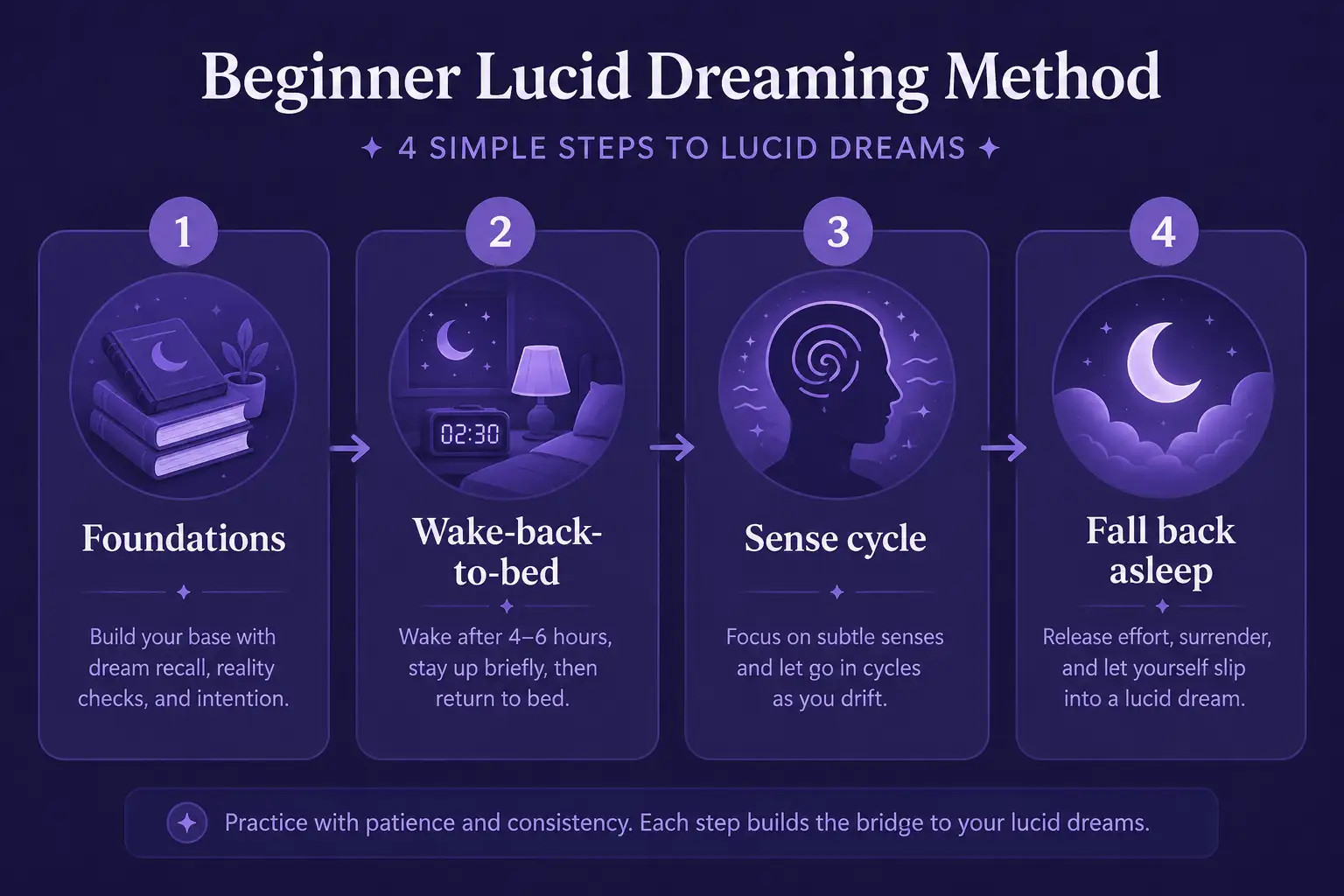
The fastest reliable way to lucid dream as a beginner is SSILD (Senses Initiated Lucid Dream), run after a wake-back-to-bed alarm roughly four to five hours into your sleep. It is also the easiest, because it works while you drift back to sleep instead of forcing you to stay awake.
How fast is fast? Realistically, a few nights to about two weeks of consistent practice — not tonight, and not in five minutes. Anyone selling an instant or first-night method is overselling it. What you can compress is the setup: the three habits below take two to three days, and getting your wake timing right is the single biggest accelerator. If you have tried before and given up, the problem usually was not you — it was the method. If you’d rather understand what your lucid dreams actually mean before learning to induce them, start there and come back.
The easiest method at a glance
Short on time? Here’s the whole approach in four lines. The rest of this guide just explains each part so it actually works.
- The method: SSILD — a gentle sense-cycling technique done after a short wake-up.
- What you need first: dream recall, a reality-check habit, and the right wake time (covered next).
- Realistic timeline: a few nights to about two weeks for most beginners.
- Backup plan: if SSILD doesn’t click, switch to the 60-second FILD technique.
3 things to set up first (do these for 2–3 days)
SSILD relies on three habits being in place. Don’t skip them — they take only a couple of days to build and they’re the difference between “nothing happened” and your first lucid dream.
1. Keep a dream journal
Keep a notebook or phone note by your bed and write down anything you remember the moment you wake — even a single image or feeling. Within two or three days your recall sharpens dramatically. This matters because a lucid dream you can’t remember is a lucid dream you can’t learn from. If recall is where you keep getting stuck, our guide to how to remember your dreams covers seven techniques in detail.
2. Do reality checks that actually carry into dreams
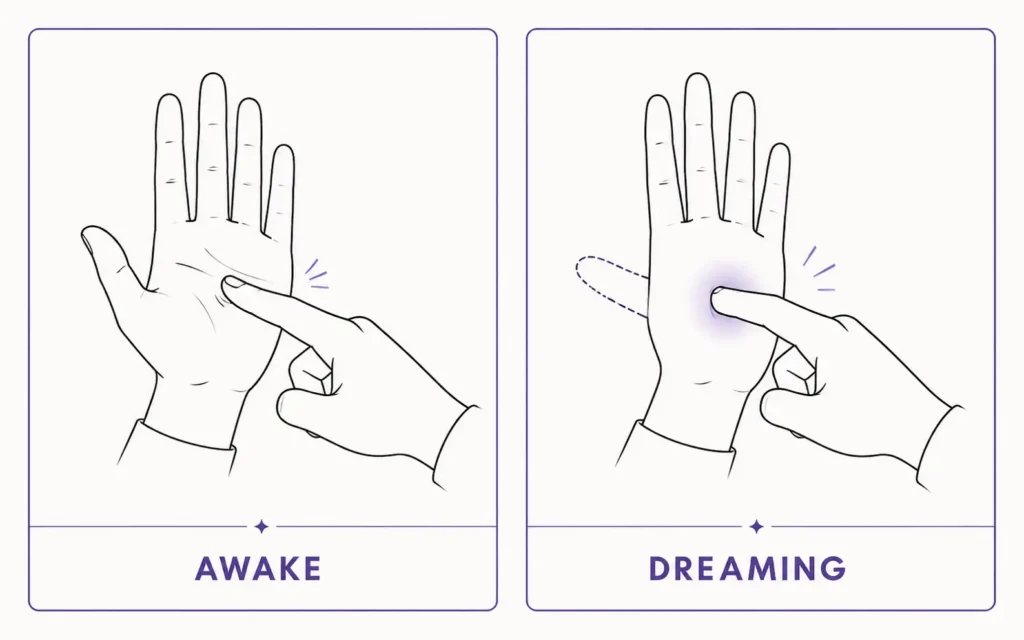
A reality check is a quick test of whether you’re awake or dreaming — try to push a finger through your palm, or pinch your nose and try to breathe. The trick is to genuinely question your reality each time, not perform it on autopilot. Do this 5–10 times a day and the habit eventually fires inside a dream, which is the moment you become lucid.
Be realistic about what reality checks do, though. In the International Lucid Dream Induction Study (355 participants), the groups that added reality testing on top of MILD did worse, not better: success rates of 10.8% and 13.4%, against 18.4% and 20.2% for MILD on its own and 16.9% for SSILD. The authors concluded that reality testing “appears to be an ineffective lucid dream induction technique” over a week of practice. Keep the habit — it is what makes you notice a dream sign once you are already primed — but do not treat it as the engine. The engine is the technique you run at your wake-back-to-bed alarm.
3. Time your sleep — why the last cycle matters
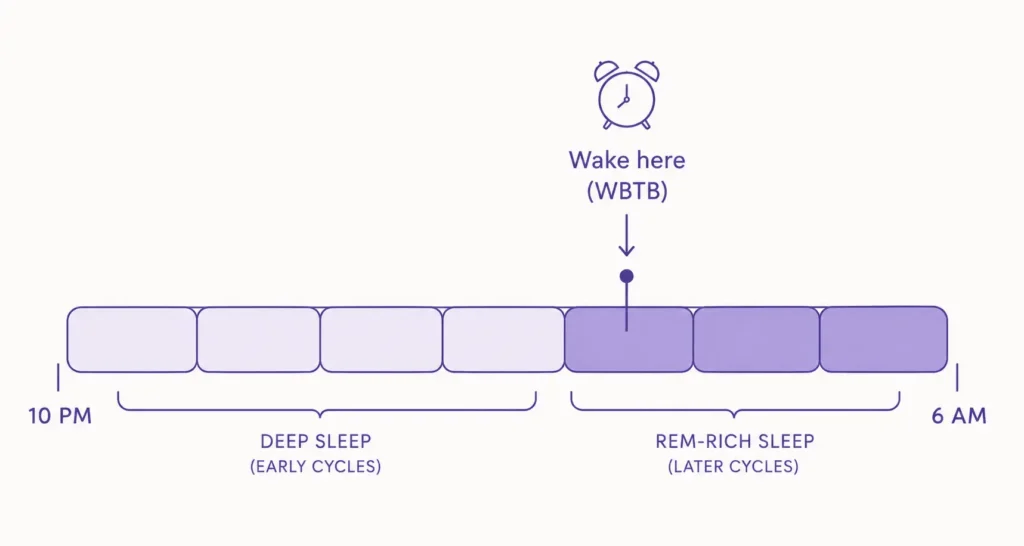
Lucid dreams happen most easily during REM sleep, which is longest in the final hours before you wake. That’s why SSILD uses a brief wake-up after about four to five hours of sleep: it places the technique right before your richest REM window, when a lucid dream is most likely. If you want the science of why the brain dreams the way it does, see why your brain throws midnight Netflix parties.
How to lucid dream with SSILD, step by step
This is the core of the method. Follow it exactly the first few times, then adjust the timing to suit your own sleep.
Step 1 — Wake-back-to-bed (set the alarm)
Go to bed as normal and set a quiet alarm for about four to five hours later. When it goes off, stay calm and don’t fully wake yourself up — no bright screens. You just need to be conscious enough to run the next step. If you struggle to settle back down, a 5-minute deep sleep meditation during this window helps you relax without waking up fully. Our full guide to wake back to bed covers the timing, how long to stay up and how to keep the sleep cost small.
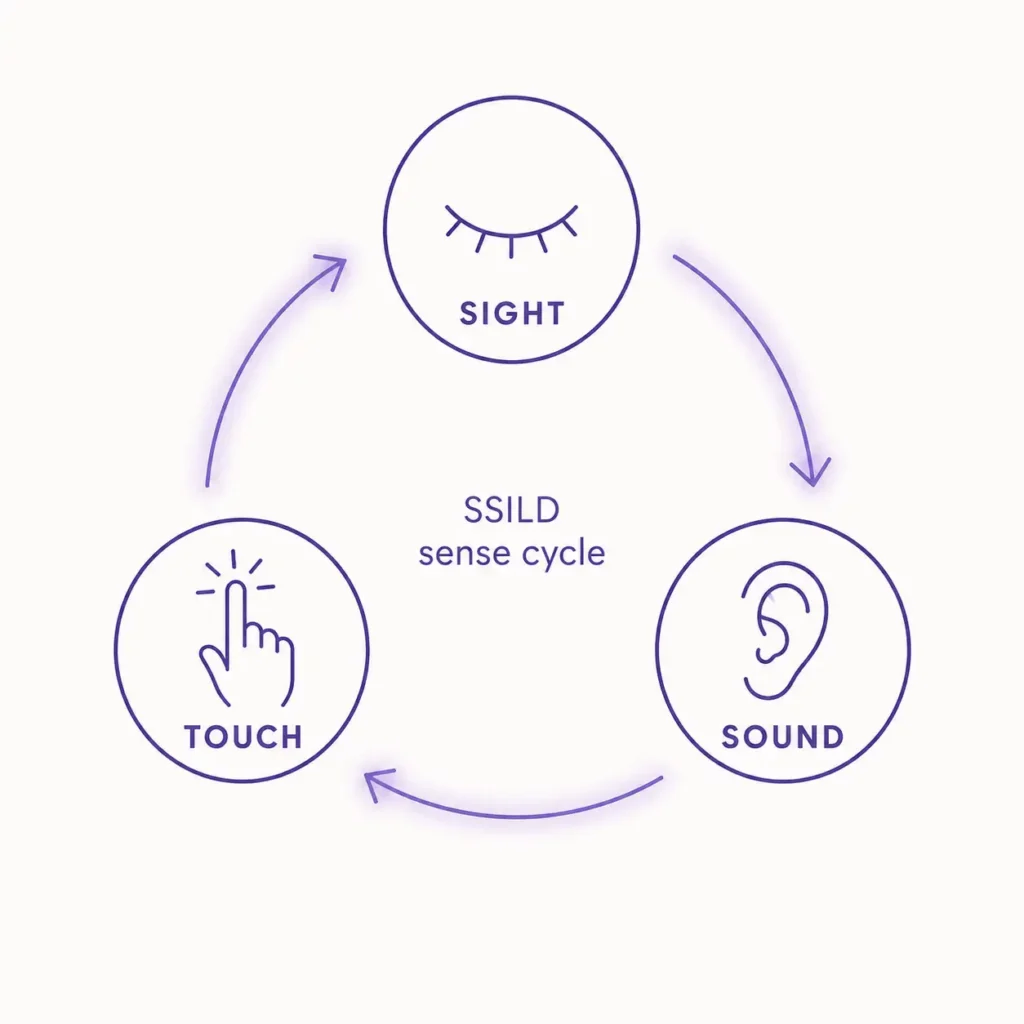
Step 2 — The sense cycle: sight, sound, touch
Lying comfortably with eyes closed, gently cycle your attention through three senses, a few seconds each, without straining: first your sight (the darkness behind your eyelids), then your hearing (any faint sounds or silence), then touch (the feeling of your body on the bed). Do several relaxed, slow cycles. Don’t concentrate hard — the looseness is what makes it work.
Step 3 — Fall back asleep and let it happen
After a few cycles, stop the technique and simply let yourself drift back to sleep in any comfortable position. That’s it — you don’t need to “try” to lucid dream. SSILD has primed your awareness, and the lucidity tends to arrive naturally during the dreams that follow.
What the transition feels like (so you don’t panic)
Some people notice harmless sensations as they fall asleep — light patterns, gentle vibrations, or a floating feeling (this is hypnagogia). You may also briefly experience sleep paralysis, where the body is still asleep but the mind is aware. It’s normal and passes on its own; staying relaxed lets it carry you straight into a dream.
If SSILD doesn’t click: the 60-second FILD backup
If SSILD isn’t working after a week or two, try FILD (Finger Induced Lucid Dream). During your wake-back-to-bed moment, as you relax, make a tiny up-and-down motion with two fingers — as light as imagining playing a piano key. After about 30–60 seconds, do a reality check. If you’re dreaming, the test gives it away and you’re lucid. FILD suits people who find the sense cycle too fiddly.
Two more techniques worth knowing: MILD and WBTB
SSILD and FILD aren’t the only paths in. If you want a second technique to rotate in — or SSILD just isn’t clicking for you — these two are the most scientifically documented alternatives.
MILD: the memory-based method
MILD (Mnemonic Induction of Lucid Dreams) was developed by Dr. Stephen LaBerge and is one of the most scientifically studied lucid dreaming techniques. Instead of cycling your senses, it relies on prospective memory — the same mental skill you use to remember an appointment.
- During your wake-back-to-bed window, replay a recent dream in your mind.
- Pick out a dream sign in it — something surreal or impossible that happened.
- Repeat a short mantra as you drift off: Next time I’m dreaming, I will remember that I’m dreaming.
- Visualize yourself spotting that dream sign and realizing, in the dream, that you’re dreaming.
MILD pairs well with the wake-back-to-bed window described in Step 1 above — do the sense cycle from SSILD first, then switch to MILD’s visualization if your mind is still active.
Why the wake-back-to-bed timing actually works
The 4–6 hour wake-up isn’t arbitrary. Sleep research on induction techniques shows that briefly interrupting sleep during this window raises cortical activation right before you re-enter a long, REM-dense cycle — which is exactly when both SSILD and MILD are most effective.
Can you lucid dream without wake-back-to-bed?
Yes, but it is slower, and it is worth knowing exactly what you are giving up. Setting a 4am alarm is the part of this method people most want to skip, so here is the honest position — and if you decide to keep it, the WBTB guide covers the timing and the sleep-cost rules in full.
WBTB is not doing anything mystical. It puts your attempt immediately before the longest, densest REM period of your night, at a moment when your brain is briefly more activated than it would otherwise be. Remove it and you keep the technique but lose the timing — which is most of the advantage. In the International Lucid Dream Induction Study, every condition that produced results used a wake-back-to-bed window; there is no no-WBTB protocol with comparable evidence behind it.
What you can do instead:
- Use the wake-ups you already have. If you naturally surface at 3am or 5am, that is a wake-back-to-bed window you did not have to set an alarm for. Run SSILD or MILD then and go back to sleep.
- Run MILD at bedtime instead. The mantra and visualization still work from a normal lights-out; they just have to survive several hours and two or three shallow REM periods before they get their best chance. Expect more nights, not zero results.
- Try an afternoon nap. A nap of an hour or more can contain REM, and you enter it from a fully awake mind — the same structural advantage WBTB gives you, without the 4am alarm.
- Lean harder on recall and dream signs. Becoming lucid spontaneously inside a dream depends on recognising your own recurring dream content, and that only exists if you are writing dreams down.
One thing is not optional either way. Across both of Aspy’s induction studies, the strongest personal predictor of success was general dream recall — people who remembered their ordinary dreams well were the ones who got lucid. If you are skipping WBTB, that becomes the whole game, so start with the seven dream recall techniques before worrying about which induction method to use.
How to tell if it worked — and how to stay in the dream
Signs you actually had a lucid dream
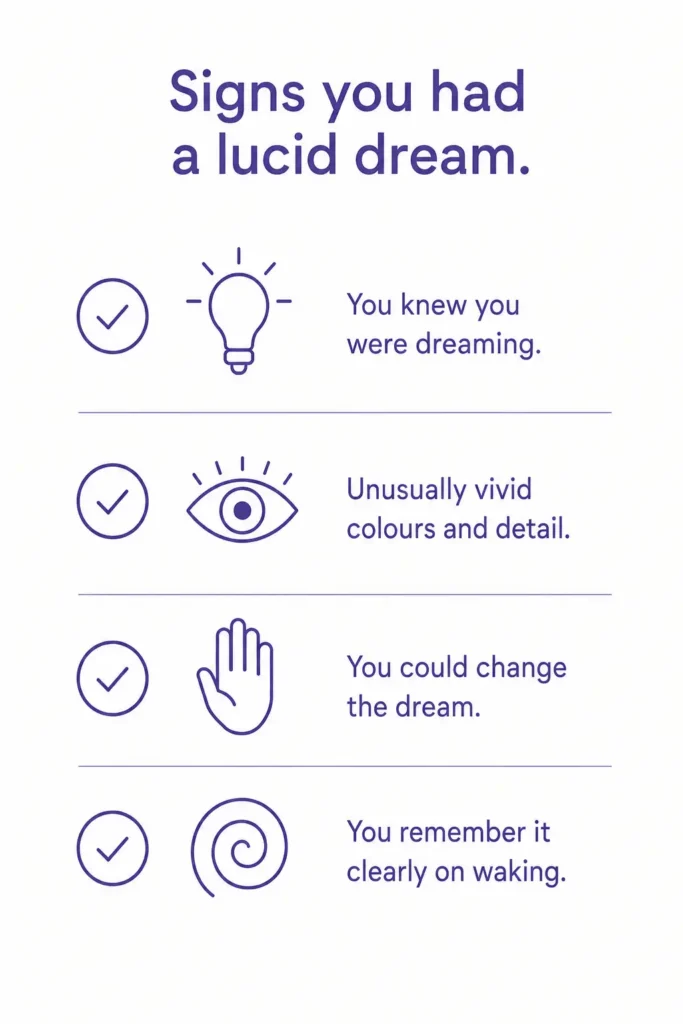
You had a lucid dream if, at any point, you knew you were dreaming while it was happening. Common signs: a sudden “wait, this is a dream” realization, unusually vivid colours or detail, or being able to make a choice that changed the dream. Simply remembering a dream clearly is good progress, but it isn’t lucidity on its own — awareness inside the dream is the marker.
Stabilizing the dream so it doesn’t collapse
Most beginners get lucid and then wake instantly from excitement. To stay in: don’t react with a jolt of emotion. Instead, rub your dream hands together or spin your dream body gently — both anchor your senses and keep the dream stable. Look at a detailed object up close to sharpen the scene.
5 beginner mistakes that kill your progress
- Trying to stay fully awake. SSILD is meant to be gentle — if you’re wide awake, you waited too long or tried too hard.
- Skipping the dream journal. Without recall, you won’t notice or remember your lucid moments.
- Doing reality checks mechanically. If you don’t truly question reality, the habit won’t fire in a dream.
- Giving up after two or three nights. A couple of weeks of consistency is normal before the first success.
- Practising at the wrong time. Attempting SSILD at the start of the night, outside REM-rich sleep, rarely works.
Optional extras: sleep tech and supplements
None of this is required — the habits and techniques above are enough for most beginners. But if you want to go further once the basics are working:
- EEG sleep masks: Some devices detect REM sleep and cue you with a subtle light or sound — a nudge toward awareness without waking you up.
- Galantamine: the one supplement with clinical evidence behind it for increasing lucidity frequency. Use it occasionally at most, and only after checking with a doctor — it’s a cholinesterase inhibitor, not a supplement to take casually.
- Daytime meditation: people with a regular meditation practice tend to have a higher baseline awareness, which appears to carry over into dreams — though the evidence for that is weaker than it sounds. If you don’t already meditate, our beginner’s guide to meditation is a reasonable place to start.
How fast can you lucid dream? A realistic timeline
There’s no guaranteed method — anyone promising an instant, foolproof lucid dream is overselling it. That said, here’s what’s typical for beginners following SSILD consistently:
What about doing it tonight, immediately, or in 5 minutes? Those searches are common, so here is the straight answer. A lucid dream on the first night does happen to a small number of people, usually ones who already remember their dreams well — but it is luck, not method. There is no technique that produces a lucid dream in 5 minutes from being fully awake, because lucidity has to happen inside REM sleep, and your first substantial REM window is hours away. The closest thing to an instant method is FILD, described above: it takes about 60 seconds to perform, but only works when you are already drifting back to sleep after a wake-back-to-bed alarm. So the honest framing is not “how to lucid dream in one night” but “how to reach your first lucid dream in the fewest nights” — and that is what the timeline below is.
- Days 1–3: Build dream recall and reality-check habits. Don’t expect lucidity yet.
- Week 1: First attempts at SSILD with wake-back-to-bed. Some people get lucky here.
- Weeks 1–2: Most beginners report their first lucid dream in this window.
- Beyond 2 weeks: If nothing yet, switch to FILD and double-check your wake timing — these fix most stalls.
Frequently asked questions
For most healthy people, yes — lucid dreaming is a natural state and safe to practise. The main downside is some lost sleep from the wake-back-to-bed step. If you have a history of certain mental-health conditions or struggle to tell dreams from reality, check with a doctor first.
Almost everyone can with practice. Some people naturally lucid dream often; others need a few weeks of consistent recall and technique work. Persistence matters more than talent.
For most beginners, SSILD — because it’s gentle and doesn’t require staying awake. FILD is a close second and even faster to perform, so it’s a good fallback.
Easiest means the highest success rate with the least effort, which SSILD (above) covers. Fastest means trying to trigger a lucid dream as quickly as possible — for that, WBTB combined with MILD is the closest thing to a shortcut, though it’s less reliable for total beginners than SSILD.
WBTB means setting an alarm for 4–6 hours after falling asleep, staying awake briefly, then going back to sleep. It places your induction attempt — SSILD, FILD, or MILD — right before your longest REM window, which is why nearly every reliable technique uses it.
Galantamine is the only supplement with clinical evidence behind it for increasing lucid dream frequency. It’s not something to take nightly, and you should check with a doctor first — it’s a cholinesterase inhibitor with real contraindications, not a casual sleep aid.
Most beginners following SSILD consistently report their first lucid dream within a few nights to about two weeks. The first two to three days go on building dream recall and a reality-check habit, so lucidity is not expected in that window. Getting your wake-back-to-bed timing right, roughly four to five hours into sleep, is the single biggest thing that shortens it.
It happens, but it is uncommon and it is luck rather than method. People who already remember their dreams vividly have the best chance. If you want to give the first night its best shot, set a wake-back-to-bed alarm for about four to five hours after you fall asleep and run SSILD when it goes off – but treat a result as a bonus, not the plan.
No. Lucidity has to occur inside REM sleep, and from a fully awake start your first substantial REM window is several hours away, so no technique produces a lucid dream in five minutes. The nearest equivalent is FILD, which takes about 60 seconds to perform – but only works when you are already drifting back to sleep after a wake-back-to-bed alarm.
Not from being awake. The fastest-acting technique is FILD, performed in about a minute during a wake-back-to-bed window, and even that is not instant or reliable. Treat any method advertised as immediate with suspicion – the honest goal is reaching your first lucid dream in the fewest nights, not in the fewest minutes.
Yes, but expect it to take longer. WBTB works by placing your attempt right before the longest REM period of the night, and in the International Lucid Dream Induction Study every condition that produced results used it. Without it your options are running MILD at bedtime, using a wake-up you get naturally at 3am or 5am, or trying an afternoon nap — plus building strong dream recall, which was the biggest personal predictor of success in that research.
Five to ten times a day is the usual advice, and genuinely questioning whether you are awake matters more than the count. Keep your expectations modest: in the International Lucid Dream Induction Study, adding reality testing on top of MILD produced lower success rates than MILD alone, so treat it as a supporting habit that helps you notice a dream sign rather than the technique doing the work.
New to the topic? Browse more in Sleep & Dreaming.