Dreaming about snakes has no fixed meaning established by the research cited here. A snake dream may remind you of recent experiences, fears, or personal beliefs, but it is not sufficient evidence that someone will betray you or that something bad will happen. Research connects waking activities with dream content; it does not provide a snake-symbol dictionary (Schredl and Hofmann, 2003, Consciousness and Cognition).
If you woke frightened after a snake bite dream, start with what happened and how you felt. If the snake seemed calm or interesting, record that too.
You can explore the dream without treating it as a warning. You can also leave it unexplained.
What does dreaming about snakes mean?
Begin with your experience of the snake rather than an interpretation found online.
Was it threatening you, resting nearby, or moving away? Were you frightened, curious, disgusted, or comfortable? Did the setting remind you of somewhere familiar?
These questions help you describe the dream. They do not reveal a hidden message or diagnose an emotional problem.
Start with your feelings and personal associations
List what snakes bring to mind for you. That might include a childhood encounter, a pet, a religious image, a film, or a fear of being bitten.
Next, name the strongest feeling in the dream. If you felt trapped, you could ask whether any current situation feels restrictive. If you felt protective of the snake, you could consider what you wanted to keep safe within the scene.
Treat these as optional reflection prompts. They are not research-backed translations of particular snake behaviors.
A useful note might say that the dream reminded you of work stress. Avoid turning that possibility into certainty that the snake represented your manager.
If no connection fits, there is no need to invent one.
Why a dream symbol cannot reliably identify betrayal, danger, or the future
Be careful with interpretations that identify another person as dishonest or dangerous. A dream does not give you observable evidence about that person’s behavior.
Schredl and Hofmann’s 2003 study in Consciousness and Cognition examined continuity between waking activities and dream activities. It did not establish a method for predicting betrayal or future events from snake imagery (study).
That is a limitation of what the source supports, not a claim that the researchers tested every supernatural interpretation.
If you already have a relationship concern, consider actual events, conversations, and patterns of behavior. Do not use the dream to fill gaps in what you know.
What dream research can—and cannot—tell us
Researchers can compare dream reports with waking activities, but that does not translate a particular snake image.
It helps to separate a broad research finding from an explanation of your own dream.
How waking experiences and concerns appear in dreams
Schredl and Hofmann (2003), writing in Consciousness and Cognition, reported support for continuity between waking activities and dream content. Their findings concern associations, rather than a guaranteed explanation for each remembered scene (study).
For reflection, recent experiences are therefore worth considering. Did you see a snake, discuss one, or watch something involving reptiles?
Check ordinary possibilities before searching for a symbolic explanation. You may still be uncertain about why that image appeared.
For broader background, read LifeNByte’s guide to sleep, dreaming, and your sleeping brain.
Threatening dreams: one theory, not a proven explanation for every snake dream
Threat simulation theory proposes that threatening dreams have a biological function involving the simulation of danger. Valli and Revonsuo (2009), in The American Journal of Psychology, reviewed studies testing the theory and reported supporting evidence (review).
This is a theory about dreaming generally. It does not establish why you dreamed of a snake, or show that a threat from the dream exists outside it.
Use it as background information, not a personal prediction.
Why general dream research does not validate a snake-symbol dictionary
Scarpelli and colleagues (2022), in Journal of Sleep Research, discuss unresolved questions in dream science. Their review also describes a move in some approaches away from standardized symbolism and toward individual experience (review).
Neither that review nor the other sources cited here establishes fixed meanings for snake bites, colors, or numbers.
Claims that three snakes represent three enemies, for example, need their own supporting evidence. General findings about dreaming cannot supply it.
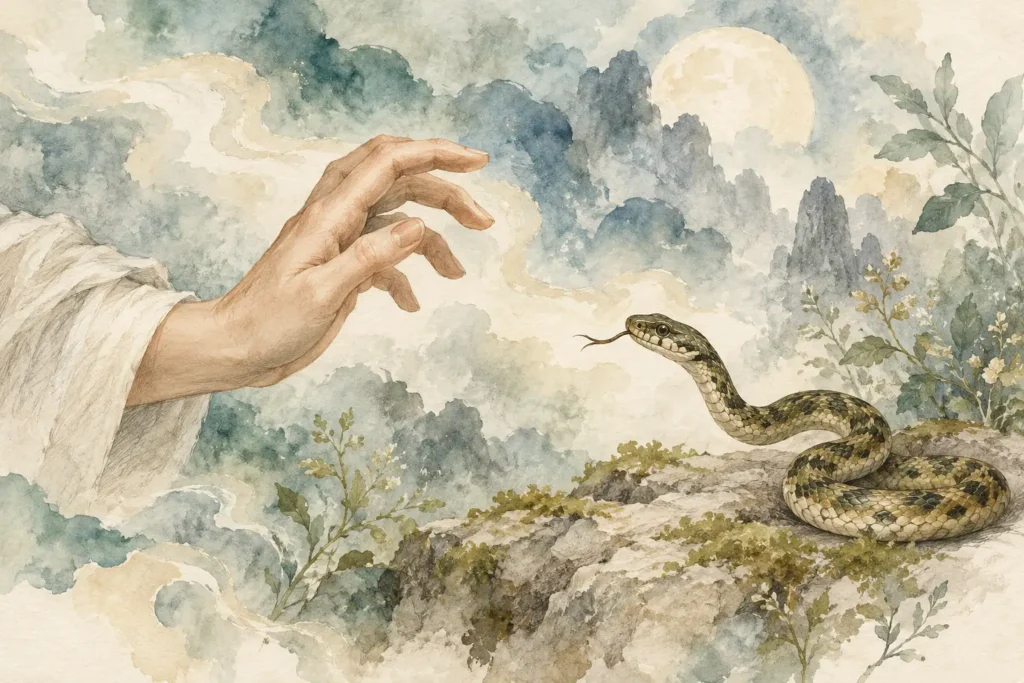
What does it mean when a snake bites you in a dream?
For a bite dream, record what happened before the bite and how you responded.
Did the snake appear suddenly? Were you approaching it? Did you try to escape, protect someone, or get help?
Those details may give you something to reflect on. They do not identify what the bite represents.
Reflecting on fear, pain, and vulnerability without assuming a hidden message
If you felt caught off guard, you could ask whether anything recently surprised you. If you felt helpless, you could consider whether there is an existing situation in which you want more choice or support.
Keep the connection tentative. Feeling that an interpretation fits does not make it a finding about your subconscious.
A betrayal interpretation might occur to you if trust is already a concern. The dream still cannot establish whether anyone has betrayed you.
You can also decide that the scene does not resemble anything in your waking life.
Details to notice: what happened, how you reacted, and how you felt afterward
Write down the sequence before consulting interpretations:
- What happened immediately before the bite?
- How did you respond?
- Was anyone else present?
- What feeling remained after waking?
Keep details that help you describe the dream; you do not have to assign each one a meaning.
This article’s sources do not support rules such as a hand bite meaning a work problem or a leg bite meaning blocked progress. Avoid treating body parts as a code.
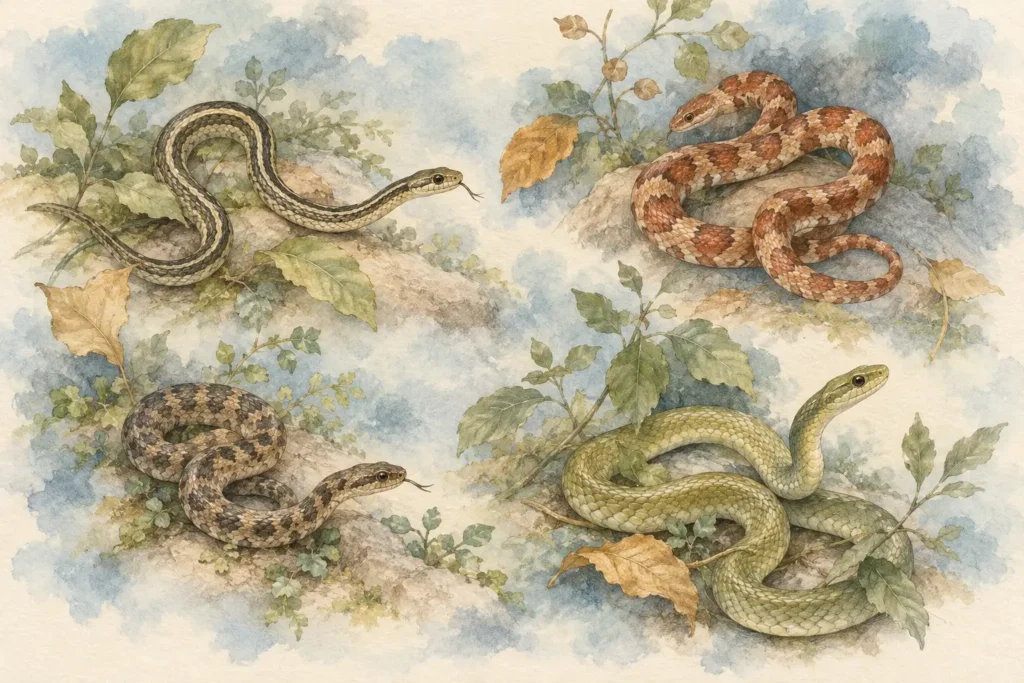
What does dreaming about lots of snakes mean?
Start with whether the snakes felt threatening, fascinating, or ordinary within the dream.
Being surrounded might suggest overwhelm to you. That can be a personal analogy, but it is not an established interpretation.
Exploring feelings of overwhelm or threat as personal possibilities
If overwhelm describes the scene, ask whether you are currently handling more than you want to. You might identify a practical concern worth addressing regardless of the dream.
If that description does not fit, set it aside. Do not search for problems simply to make an interpretation work.
Likewise, a peaceful scene does not need to be recast as danger because snakes appeared in it.
Considering recent encounters, films, stories, or snake fears
Think back to recent conversations, videos, news, or real encounters involving snakes. Note any connection without assuming it explains the whole dream.
The table below offers questions, not decoded meanings.
| Dream scenario | Reflection question | Conclusion to avoid |
| A snake bites you | What felt sudden or frightening? | Someone will betray me |
| Many snakes surround you | Did I feel overwhelmed, curious, or calm? | Each snake represents an enemy |
| A snake chases you | What was I trying to escape in the scene? | A real threat is approaching |
| A snake rests nearby | What does this animal remind me of? | Healing or good luck is guaranteed |
| You protect a snake | What mattered about keeping it safe? | This proves I have a special spiritual role |
Is seeing a snake in a dream good or bad?
You do not need to classify it as an omen.
First describe whether the dream was pleasant, frightening, or confusing. Then consider whether any interpretation is useful to you without assuming it predicts an event.
How a frightening dream differs from a calm or curious one
After a frightening dream, you may want reassurance and time to settle. Interpretation can wait until morning.
After a calm dream, you may want to record what interested you. You can also leave it alone.
Neither response requires deciding that the snake was a positive or negative sign. Your immediate feelings are enough to guide what you do next.
Why the dream alone is not evidence of good luck or impending harm
The studies cited here do not establish snake dreams as forecasts. An interpretation being comforting or alarming does not supply the missing evidence.
Keep important decisions tied to waking information. Avoid confronting someone, canceling plans, or paying for a promised remedy solely because of a dream.
If reflection highlights a concern that already exists, address that concern on its own merits.
Spiritual meanings of snake dreams
A spiritual reading is an interpretation made within a belief system. It should be labeled accordingly.
This article does not assign snake meanings to particular religions or cultures without a source that represents them accurately.
Transformation, renewal, danger, and healing as symbolic interpretations
You might choose to use shedding skin as a metaphor for change or renewal. You might personally associate a snake with danger, protection, or healing.
These are examples of possible associations, not verified messages or a summary of every tradition.
A renewal metaphor can prompt reflection on a change you want to make. It does not show that change is destined to happen.
Similarly, a healing interpretation cannot confirm recovery from an illness. Keep health decisions separate from dream symbolism.
How beliefs differ across traditions and individuals
If you want an interpretation within your own tradition, look for sources that clearly identify that tradition and explain its teachings. Be cautious with pages that combine unrelated beliefs into one universal answer.
Ask whether you are treating the interpretation as a belief, a metaphor, or a factual claim.
Scarpelli and colleagues’ 2022 review in Journal of Sleep Research addresses dream science and interpretation. It does not establish spiritual meanings for snakes (review).
That leaves room for personal belief while keeping the evidence clear.
How to reflect on your snake dream
Spend a few minutes recording the dream, then stop if no clear connection emerges.
You do not need a complete interpretation to make the exercise worthwhile.

A five-step reflection exercise
- Record what you remember. Describe the setting, snake, actions, and ending. Leave gaps instead of guessing. If details fade quickly, these techniques for remembering your dreams can help.
- Name the strongest feeling. Choose your own description, such as fear, curiosity, relief, anger, or calm.
- List personal associations. Include memories, beliefs, media, and real encounters involving snakes.
- Consider recent experiences. Ask whether anything resembles the dream’s setting or feeling. Keep several possibilities open.
- Choose an ordinary next step. Address an existing concern through planning, a conversation, rest, or support. If nothing fits, finish the exercise there.
This is a journaling exercise, not a validated test or treatment.
Use the dream as a prompt, without making major decisions from it
Describe a possible connection without treating it as proof.
For example, a dream might remind you that you want clearer boundaries. You can think about those boundaries without claiming that the dream exposed another person’s intentions.
Keep your notes provisional and revisit them only if you want to.
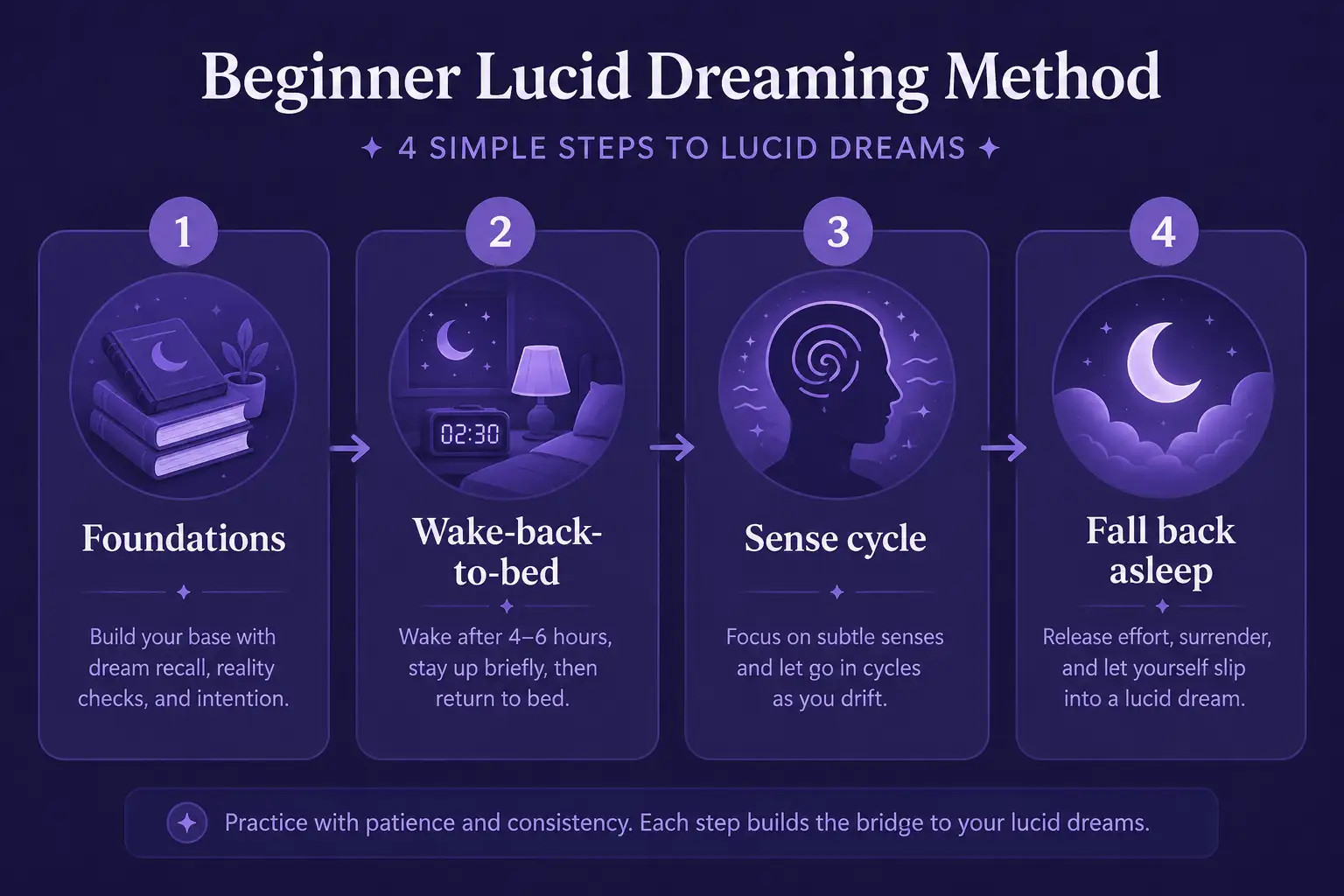
For a separate look at awareness during dreams, read what lucid dreaming means.
What to do if snake nightmares keep returning
If the dreams repeatedly interrupt sleep, focus on their effect on your life rather than finding a symbolic explanation.

Track frequency, distress, and sleep disruption
Keep a short record of when the dreams occur, whether they wake you, and how you feel the next day. These notes can help you describe the problem at an appointment.
Morgenthaler and colleagues (2018), in Journal of Clinical Sleep Medicine, reproduce a diagnostic framework in which significant distress or impairment is central to nightmare disorder. Relevant concerns include bedtime avoidance and daytime difficulties (American Academy of Sleep Medicine position paper).
If you want a brief phrase after waking, try: I’m awake now. I can look around the room and think about the dream later.
This is an optional reassurance prompt, not a nightmare treatment.
When to seek help and what imagery rehearsal therapy involves
Consider professional help if nightmares repeatedly disrupt sleep, make you avoid bedtime, or interfere with daily activities.
Morgenthaler and colleagues’ 2018 AASM position paper recommends imagery rehearsal therapy for nightmare disorder and PTSD-associated nightmares. The approach involves revising nightmare imagery and rehearsing the revised version while awake (Journal of Clinical Sleep Medicine).
A qualified clinician can explain whether it suits your circumstances and help with distressing or trauma-related material.
You do not need to work out what the snake means before asking for help.
Frequently asked questions
The sources cited here do not establish a fixed meaning for a snake bite dream. You can reflect on fear, surprise, or vulnerability, but those are possible personal connections rather than conclusions about your life.
You do not have to label it either way. Describe how it felt without assuming that it forecasts luck or harm.
Notice whether the scene felt crowded, frightening, interesting, or calm. Overwhelm may be a useful personal analogy, but this article’s sources do not support translating the number of snakes into problems or enemies.
A recurring image alone does not identify its cause. Consider your recent experiences and associations, and seek support if the dreams repeatedly disturb sleep or daily life.
The dream does not establish another person’s intentions. If trust is a concern, focus on observable behavior and direct conversation before reaching a conclusion.
You may interpret the image through your personal beliefs or a clearly identified tradition. Keep that reading separate from a verified prediction, and avoid assuming it applies to everyone.
Color may matter to your own associations, but the cited sources do not establish a color-to-meaning system. Ask what the color reminds you of rather than assigning it a universal message.
Consider help when nightmares regularly interrupt sleep, lead to bedtime avoidance, or affect daytime functioning. These concerns align with the framework described by Morgenthaler and colleagues (2018), Journal of Clinical Sleep Medicine, for the AASM (position paper).
Bottom line
The research cited here does not provide a fixed translation for snake dreams. You can explore your feelings, associations, and beliefs while leaving the meaning uncertain. If recurring nightmares are disrupting your sleep, getting support matters more than finding an interpretation.