Spiritually, sleep paralysis is most often read as a visit or an attack: a jinn, a witch, the “Old Hag”, a demon, or a ghost pressing down on your chest. Some people read it the other way, as a sign of spiritual sensitivity or the doorway to an out-of-body experience. Physiologically, it is the muscle paralysis of dreaming sleep continuing for a few moments after your mind has woken up, and at least 7.6% of people experience it at some point in their lives.
Those explanations are usually set against each other. This guide covers the common spiritual interpretations respectfully, as beliefs that matter to the people who hold them. It also shows what cross-cultural research found when it asked sufferers in Egypt, Turkey, Italy, Denmark and Cambodia what they believed. The most useful finding isn’t about whether spirits are real. It’s that what you believe during an episode changes how long and how frightening it is.
Key Takeaways
- It is common. 7.6% of the general population, 28.3% of students and 31.9% of psychiatric patients have had at least one episode, across 35 studies and 36,533 people (Sharpless & Barber, Sleep Medicine Reviews, 2011).
- The “presence” is part of the pattern. A sensed intruder, pressure on the chest and floating sensations are consistent enough across cultures to have been modelled from REM-sleep physiology (Cheyne et al., 1999).
- Most traditions have a name for it: the jinn in Egypt, the Karabasan in Turkey, the Pandafeche in Italy, the Old Hag in Newfoundland, and the ghost that “pushes you down” in Cambodia.
- Belief shapes the experience. In Egypt, people who put their episodes down to the supernatural reported more fear and longer paralysis (Jalal & Hinton, 2013).
- Fear is the thing to work on. A four-step meditation-relaxation approach halved the number of days with episodes in a small pilot study (Jalal et al., 2020).
What actually happens during sleep paralysis
During REM sleep, the stage in which most vivid dreaming happens, your brain switches off the muscles you use to move so that you don’t act out your dreams. Sleep paralysis happens when you become conscious while that switch is still on, usually as you wake up and sometimes as you fall asleep. You are awake, aware of your room, and unable to move or speak. Episodes typically last from a few seconds to a couple of minutes.
The paralysis is only half of it. Dream imagery can leak into waking perception at the same time. In a 2020 study of 439 Polish students, 32% had experienced sleep paralysis. Of those, 94% reported physical symptoms (most often a racing heart), 93% reported fear, most commonly fear of dying, and 66% had hallucinations. That combination is what makes the experience feel like something is happening to you rather than inside you.
Why it feels like someone is in the room
People in very different places describe remarkably similar episodes. Psychologists at the University of Waterloo analysed several large samples of reports and found the experiences group into three clusters, each linked to what the brain does in REM sleep (Cheyne, Rueffer & Newby-Clark, 1999):
| Cluster | What people experience | Proposed REM-sleep source |
|---|---|---|
| Intruder | A sensed presence, fear, footsteps or voices, a figure in the room | A hypervigilant threat-detection state starting in the midbrain |
| Incubus | Pressure on the chest, difficulty breathing, pain, a feeling of being held down | The paralysis itself changing how breathing feels |
| Unusual bodily experiences | Floating, flying, leaving the body, sometimes bliss | Conflicting signals about the body’s position and movement |
The folklorist David Hufford, who studied these episodes for decades, adds a point worth taking seriously. In his 2005 review, he found that a majority of people experience sleep paralysis as a kind of spiritual experience. The pattern appears even in people with no cultural story for it, including in mainstream modern America. In other words, the “threatening presence” is not something people only report because they were told to expect it.
What does sleep paralysis mean spiritually? 5 common interpretations
These are beliefs, and we present them as beliefs. They carry real meaning for millions of people, and nothing here is meant to dismiss anyone’s faith. Where research has looked at a particular interpretation, we’ve said what it found.
1. A jinn or spirit visiting
In Islamic tradition, jinn are spirit-like beings, and in many Muslim-majority countries they are the most common explanation for sleep paralysis. In a study comparing Egypt and Denmark, 48% of Egyptians from the general population believed their episodes were caused by the jinn. University students in Cairo were less likely to say so. In Turkey, the equivalent figure is the Karabasan, a spirit-like creature from folk tradition. Among 59 students in Istanbul, 88% knew the name, 17% believed the Karabasan might have caused their own episodes, and 37% used religious practices to prevent new ones: making dua, reciting the Quran, or wearing a talisman inscribed with Quranic verses.
2. The Old Hag, or the “mare”
In Newfoundland, sleep paralysis is known as being “hagged”: an old woman sits on your chest in the night. Hufford’s 1982 book The Terror That Comes in the Night made the tradition famous in sleep research. The idea is old in English too. A “mare” was a spirit believed to sit on sleepers and smother them, which is where the word nightmare comes from. Before it meant a bad dream, it meant almost exactly what we now call sleep paralysis.
3. A witch or ghost pressing down
In Italy’s Abruzzo region, the attacker is the Pandafeche, described as an evil witch, a ghost-like spirit or a terrifying humanoid cat. Among 68 people who had experienced sleep paralysis, 38% believed the Pandafeche might have caused it, and 24% sensed its presence during an episode. Protective customs included placing a broom by the bedroom door or a pile of sand by the bed. Among Cambodian refugees, the belief is captured in the phrase “the ghost pushes you down”. It is tied to ideas about luck, sorcery and ghost assault.
4. A spiritual attack or test
In some Christian communities, a frightening episode is understood as spiritual oppression or a demonic attack, often met with prayer. Other spiritual frameworks describe it as a test or a sign that you are being targeted because of your spiritual path. Research has not tested these claims, and it can’t. What it can say is that the imagery people report as “demonic” is the same Intruder and Incubus imagery reported by people with no religious framework at all.
5. A sign of spiritual awakening, or a doorway out of the body
Not every interpretation is threatening. In many New Age and esoteric circles, sleep paralysis is seen as a sign of heightened spiritual sensitivity, or as the threshold to astral projection or an out-of-body experience. This interpretation draws on the third cluster in Cheyne’s model: the floating, flying and leaving-the-body sensations that some people find blissful rather than frightening. People who practise lucid dreaming sometimes treat the same state as a way into a dream. We cover that below.
The finding that matters most: what you believe changes the episode
Across several studies by the same research group, people whose cultures have elaborate supernatural stories about sleep paralysis tend to have longer, more frequent and more frightening episodes.
| Where | What the study found |
|---|---|
| Egypt vs Denmark | 44% of Egyptians had experienced sleep paralysis, against 25% of Danes. Egyptians who had it reported about three times as many episodes (19.4 vs 6.0 on average). In Egypt, believing the cause was supernatural was linked to more fear and longer paralysis (Jalal & Hinton, 2013) |
| Italy (Abruzzo) | Longer paralysis and more fear than in Denmark. 42% feared they could die during an episode, and 78% hallucinated (Jalal et al., 2021) |
| Cambodian refugees | All 42 people with sleep paralysis had panic attacks during episodes, and 91% saw an approaching figure. Sleep paralysis was three times as common with PTSD: 67% vs 22% (Hinton et al., 2005) |
This is correlational, and it doesn’t prove that belief causes worse episodes. Trauma, stress and poor sleep all play a part too. But it fits a model proposed by the Cambridge researcher Baland Jalal: fear during an episode drives panic-like arousal, which makes the episode longer, shapes what you hallucinate, and makes future episodes more likely. Whatever you believe about the cause, anything that lowers the fear is likely to help.
That’s also why a spiritual reading and a physiological one don’t have to be at war. You can hold your faith and still know that the paralysis is temporary, that it is not considered physically dangerous, and that panicking tends to make it last longer.
What to do during an episode
There are no large clinical trials of treatments for sleep paralysis yet. The most promising approach so far is meditation-relaxation (MR) therapy, developed by Jalal in 2016. In a small pilot study of people with narcolepsy, six patients who used it for eight weeks had sleep paralysis on 50% fewer days, and 54% fewer episodes overall, while a comparison group doing deep breathing did not improve in the same way. Six people is a very small sample, so treat this as promising, not proven. The steps are simple enough to remember in the moment:
What to do
1. Reframe it. Remind yourself what this is: sleep paralysis. It is temporary and harmless, and it will pass.
2. Step back. Don’t engage with what you see or feel. There’s no need to fight the figure or the pressure. Treat it as something passing through, not something you have to act on.
3. Focus inward. Close your eyes if you can and put your attention on something emotionally pleasant, such as a memory, a person you love, or a prayer or phrase that comforts you.
4. Relax your muscles. Don’t try to force your body to move. Let it go slack, and let the episode end on its own or drift back into sleep.
If your faith gives you a prayer or verse for moments like this, it can fit naturally into step three. The research doesn’t test whether prayer works spiritually. It does suggest that anything that turns panic into calm is working in your favour.
How to make it happen less often
A 2018 systematic review of 42 studies found sleep paralysis was linked with sleep problems, stress and trauma, anxiety symptoms, substance use and some physical illnesses. It was especially common in PTSD. The practical levers are mostly about sleep:
- Get enough regular sleep. Short and irregular sleep is one of the most consistent links in the research. In the Polish student study, the number of episodes was related to sleep duration.
- Try sleeping on your side. The same study linked lying on your back with more episodes. It’s a small, free change worth testing. Interestingly, sleeping on your back was one of the protective customs in Italy.
- Look after stress and anxiety during the day. They are among the strongest correlates. If you already meditate, see how long to meditate for a realistic daily dose.
- Be careful with deliberate sleep interruption. Waking in the night for lucid dreaming practice can trigger episodes in some people.
When to see a doctor
Occasional sleep paralysis is common and not a sign of illness. But recurrent isolated sleep paralysis is a recognised sleep-wake disorder, and it is worth talking to a doctor if:
- Episodes are frequent and the fear is affecting your sleep, your evenings or your daily life.
- You are also very sleepy during the day, or your muscles suddenly go weak when you laugh or feel strong emotions. Together with sleep paralysis, these can be signs of narcolepsy.
- Episodes started after a traumatic experience, or come with nightmares and flashbacks. Sleep paralysis is especially common in PTSD, and treating the trauma often helps.
Sleep paralysis and lucid dreaming
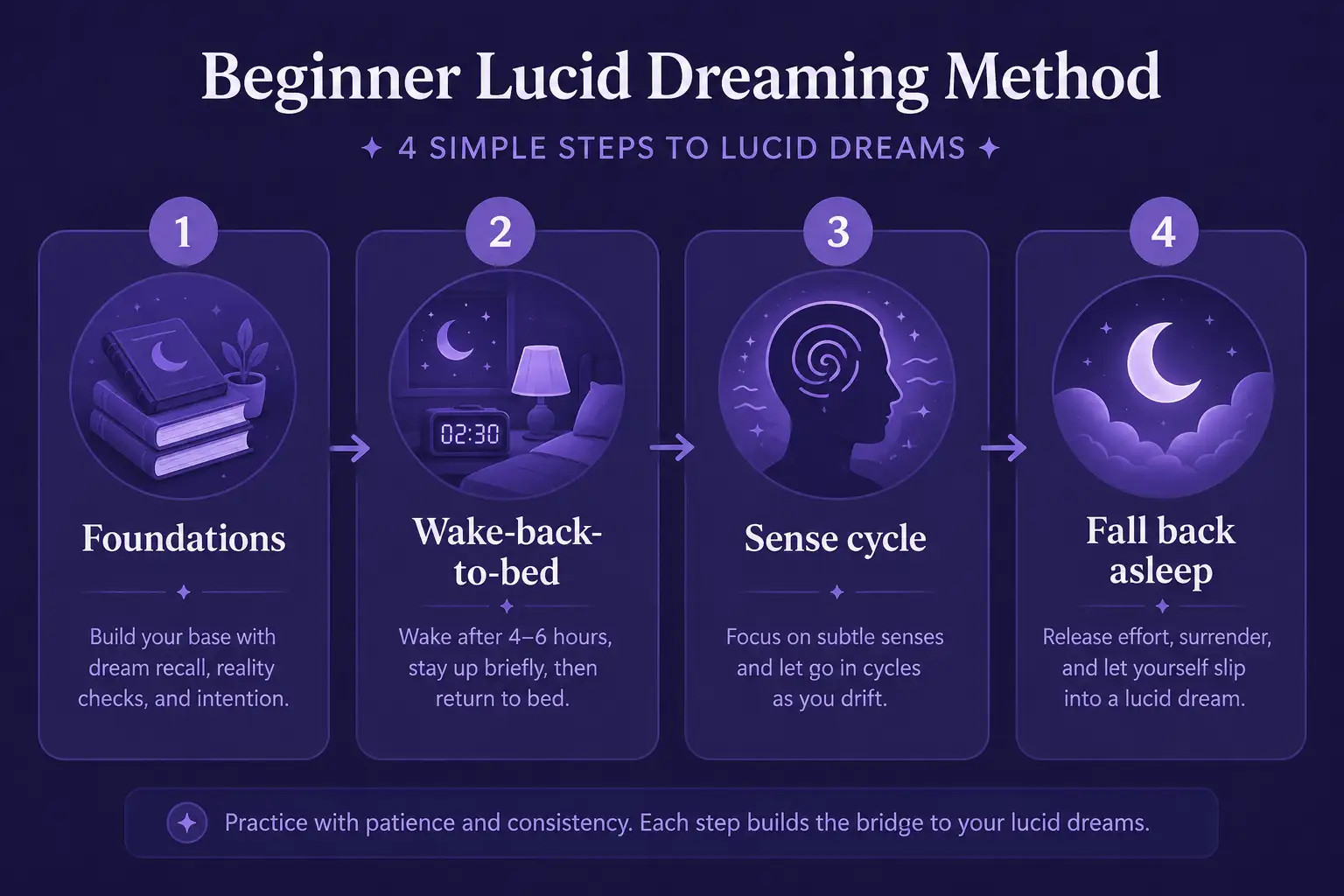
The two are close neighbours. Both involve awareness during REM sleep, and people practising lucid dreaming, especially with a wake-back-to-bed alarm, sometimes pass through a moment of sleep paralysis on the way into a dream. Techniques like SSILD tell you to observe unusual sensations calmly for exactly this reason. For what a lucid dream is (and isn’t) a sign of, see what a lucid dream means. For another strange experience with spiritual readings on one side and research on the other, see what déjà vu means spiritually.
Frequently asked questions
That depends on your beliefs, and research cannot settle it either way. What research can say is that the experiences people describe as demonic, such as a presence in the room, a figure, and pressure on the chest, follow the same pattern across cultures and religions, and match what the brain does when REM sleep paralysis continues into waking. Many people hold a spiritual interpretation and also find it reassuring to know the physical mechanism.
Interpretations vary by culture and faith. The most common are a visit or attack by a spirit, such as the jinn in Islamic tradition, the Karabasan in Turkey or the Pandafeche in Italy; the Old Hag of Newfoundland folklore; a spiritual attack or test in some Christian communities; and, more positively, a sign of spiritual sensitivity or a doorway to an out-of-body experience in New Age traditions.
There is no evidence that sleep paralysis itself is dangerous. The fear of dying during an episode is very common, reported by 46 percent of students with sleep paralysis in one Polish study and 42 percent of sufferers in an Italian study, but episodes end on their own, usually within seconds to a couple of minutes. The breathing difficulty people feel comes from the paralysis changing how breathing feels, not from breathing actually stopping.
Seeing or sensing a figure is one of the most common features of sleep paralysis worldwide. Researchers at the University of Waterloo grouped it with a sense of presence and fear into what they called the Intruder experience, which they linked to a hypervigilant threat-detection state in the brain during REM sleep. In a study of Cambodian refugees, 91 percent of those with sleep paralysis saw an approaching figure.
Some spiritual traditions interpret it that way, particularly when episodes involve floating, leaving the body or feelings of bliss rather than fear. There is no research that can confirm or rule out a spiritual meaning. Physiologically, those sensations belong to a well-described cluster of sleep paralysis experiences linked to conflicting signals about the body’s position and movement.
Research has not tested prayer as a treatment, but many people use it. In a Turkish study, 37 percent of people who experienced sleep paralysis used religious practices such as dua or reciting the Quran to prevent episodes. What research does suggest is that reducing fear during an episode helps, so if prayer calms you, it is likely working in your favour. It fits naturally into the inward-focus step of meditation-relaxation therapy.
Most episodes last from a few seconds to a couple of minutes, although they can feel much longer. Research from Egypt and Italy found that people who were very frightened, or who believed the episode had a supernatural cause, tended to report longer periods of paralysis, which is one reason staying calm is the main recommendation.
New episodes often follow a change in sleep or stress: short or irregular sleep, jet lag, shift work, a stressful period, or a traumatic event. Sleeping on your back has also been linked to more episodes. If episodes are frequent, distressing, or come with heavy daytime sleepiness or sudden muscle weakness, it is worth seeing a doctor to rule out narcolepsy or another sleep disorder.
More on sleep and dreams in Sleep and Dreaming.