
Five to ten minutes a day is the right place to start, and there is decent evidence that a short sit is not measurably worse than a long one for a beginner. But that is a starting dose, not a therapeutic one. The largest study to track meditators day by day found that how often you practise predicts benefit better than how long each session lasts — and that the amount associated with meaningful improvement was 35 to 65 minutes a day.
Almost every article on this question stops at “five to ten minutes, consistency matters more than duration.” That advice is reasonable. It is also unsourced nearly everywhere it appears, and it quietly skips the fact that researchers who have actually measured dose disagree with each other. Here is what the evidence shows, including the parts that contradict, and what it means for the number you set your timer to this week.
Key Takeaways
- Frequency beats duration. Across two months of prospectively tracked practice in 1,053 meditators, practice frequency was a stronger predictor of benefit than session length (Bowles & Van Dam, Applied Psychology: Health and Well-Being, 2025).
- The dose linked to meaningful change is far higher than the usual advice — 35–65 minutes a day for wellbeing, 50–80 minutes for mental-health outcomes, in that same study.
- Longer single sessions are not reliably better. Twenty minutes did not beat ten in a 372-person randomised experiment (Palmer et al., Scientific Reports, 2023), and a 636-person trial concluded the better dose depends on the person, not on the clock (Strohmaier et al., Mindfulness, 2026).
- Weeks matter more than minutes. Thirteen minutes a day produced measurable changes at eight weeks — but not at four (Basso et al., Behavioural Brain Research, 2019).
- The evidence genuinely disagrees. One meta-analysis found practice time correlated with outcomes (r = 0.26); a dose-response meta-regression found no significant effect at all. Nobody has established a minimum effective dose.
- Real-world use is nowhere near any of these numbers. Among app users who do stick with it, median use is about three sessions and 40 minutes a month.
The short answer, by what you are actually trying to do
“How long should you meditate” is really four different questions wearing one coat. The honest answer depends on whether you are trying to build a habit, follow a structured programme, or produce the kind of change a researcher could measure.
| Where you are | Session length | How often | What the evidence actually supports |
|---|---|---|---|
| First 4–8 weeks, building the habit | 5–10 min | Daily | Short sessions are not measurably worse than long ones at this stage; daily practice is the variable with the better evidence behind it |
| Wanting measurable mood or attention change | 13–30 min | Daily, for at least 8 weeks | 13 min a day produced changes at 8 weeks in new meditators; structured programmes ask for more |
| Following an MBSR or MBCT course | 30–45 min | 6 days a week | The original prescription. Participants typically complete about two-thirds of it |
| Chasing the doses linked to meaningful change | 35–80 min | Daily | Realistic only once a practice is already established — and this is correlational, not causal |
| Meditating to fall asleep | Whatever it takes | Nightly | A different goal entirely — see our sleep meditation guide. You are not aiming to complete a session, you are aiming to stop being awake |
Frequency beats duration — the finding that reframes the question
The most useful study on this question is also the most recent. Bowles and Van Dam (2025) followed 1,053 people through nine surveys across a two-month period of self-directed practice, then followed up two to four years later. Practice dose was significantly associated with improvements in wellbeing, affect and psychological distress — no surprise there. The useful part is which component of “dose” did the work.
Practice frequency was a stronger predictor of beneficial outcomes than session duration. How many days you sit matters more than how long you sit on each of them. That single finding rearranges the whole question: if you have twenty spare minutes a week, the evidence favours four five-minute sessions over one twenty-minute one.
The second finding is less comfortable. After controlling for prior lifetime practice, the amounts associated with meaningful improvement over those two months were 35 to 65 minutes of daily practice for wellbeing, and 50 to 80 minutes daily for mental-health outcomes. Those numbers do not appear in any beginner guide, for the obvious reason that almost nobody does them.
Two caveats worth stating plainly, because the study states them itself: this is self-reported practice in real-world conditions, not a controlled trial, so it describes what accompanied improvement rather than what caused it. And the effects were moderated by how much experience people already had — the same dose does not do the same thing to a beginner and to someone ten years in.
Does a longer session actually beat a shorter one?
This is the part where the experimental evidence gets awkward for the “work up to 45 minutes” advice.
- Ten minutes versus twenty: no difference. Palmer, Roos, Vafaie and Kober (2023) randomised 372 adults to a 10-minute meditation, a 20-minute meditation, or a length-matched control recording. Meditation beat control on state mindfulness — and there were no differences between the 10- and 20-minute conditions. The one exception was narrow: 20 minutes beat 10 for reducing state anxiety, but only among participants already high in trait mindfulness.
- Five versus twenty: it depends who you are. Strohmaier, Jones and Medvedev (2026) ran 636 adults through a 5-minute practice, a 20-minute practice, or an active control. Both doses raised state mindfulness against control, and the longer session did produce more decentering. But the best dose varied with personality: for people lower in agreeableness, the shorter practice produced a significantly stronger drop in negative affect. Their conclusion is personalisation, not a universal number.
- Repeated over time, the short version has even won outright. An earlier randomised experiment by Strohmaier, Jones and Cane compared repeated 5-minute practice against repeated 20-minute practice and a control. Both improved trait mindfulness, depression, anxiety and stress — and, contrary to what the researchers expected, the shorter practice came out ahead on trait mindfulness and on stress. One experiment is not a law of nature, and the likeliest explanation is that people simply completed the short one more reliably. But it is a real result, and it points the same way as everything else here.
Put together: at the scale of a single session or a few weeks, nobody has shown that longer is dependably better. That does not mean length is irrelevant — it means the benefit of adding minutes is small enough, and variable enough between people, that it has repeatedly failed to show up.
How long before it works: weeks, not minutes
If you are going to be impatient about a number, be impatient about the calendar rather than the timer.
Basso and colleagues (2019) randomised non-experienced meditators to 13 minutes of daily guided meditation or 13 minutes of daily podcast listening, and measured at four weeks and again at eight. After eight weeks the meditation group showed reduced mood disturbance, anxiety and fatigue, better attention and working memory, and a smaller behavioural stress response. After four weeks: nothing. Same dose, same people, twice the patience.
Zoom out further and the timescale gets longer still. Bowles, Davies and Van Dam (2022) looked at accumulated lifetime practice in 1,668 meditators and found a non-linear relationship: the association between practice and outcomes was strongest over roughly the first 500 hours, then plateaued. Their estimates for a clinically meaningful change ran from about 424 hours for psychological distress up to 811 hours for negative affect.
It is worth doing that arithmetic rather than letting the number float. At ten minutes a day, 424 hours takes about seven years. At thirty minutes a day, a little over two. At the MBSR-style forty-five minutes, about a year and a half. None of that is a reason to skip the ten minutes — a plateau after 500 hours means the early hours are the productive ones — but it is a reason to be suspicious of anything promising a transformed mind by week three.
Where “five minutes” and “forty-five minutes” both came from
The forty-five-minute figure is not arbitrary. Jon Kabat-Zinn’s original mindfulness-based stress reduction course asked participants for thirty to forty-five minutes of formal home practice a day, six days a week, for eight weeks. Nearly every clinical mindfulness trial since has inherited some version of that prescription.
What participants actually do is a different matter. Parsons and colleagues (2017) pooled 43 studies covering 1,427 MBSR and MBCT participants and found they completed about 64% of the assigned practice — roughly thirty minutes a day, six days a week. Across 28 of those studies (898 participants), there was a small but significant association between how much home practice people reported and how well they did: r = 0.26.
The five-minute figure, by contrast, does not come from a dose study at all. It comes from habit-formation reasoning — start small enough that you cannot talk yourself out of it. That is a good reason, and it is the reason our other meditation articles give it too. It is just not the same kind of claim as “five minutes is an effective dose,” and the two get blurred constantly.
The contradiction nobody mentions
Here is the part that gets left out of every “science-backed” version of this article. Parsons found practice time correlated with outcomes. Strohmaier’s dose-response meta-regression (2020) found no statistically significant dose-response effects for depression, anxiety or stress across mindfulness-based programmes — whether dose was defined by what participants were told to do or by what they reported doing.
Both cannot be the last word, and a 2026 review in the Journal of Contemplative Studies explains why they are not in conflict so much as answering different questions: Parsons compared participants within studies, while Strohmaier compared whole studies against each other. The same review notes that adherence to practice recommendations across this literature averaged about 58%, which blunts any study-level comparison of “prescribed” dose, and makes the point that matters most here — the absence of evidence is not evidence of absence.
So the honest bottom line: no minimum effective dose of meditation has been established. Anyone handing you a precise number — twelve minutes, twenty minutes, forty — is going further than the evidence goes.
The gap between the research dose and what people actually do
All of the above is a debate about 10 versus 20 versus 45 minutes. Real-world practice is not happening anywhere near that range.
Adams and colleagues’ 2026 survey of 536 meditation app users across five countries, published in the Journal of Medical Internet Research, found roughly 90% drop off within the first week. Among the people who stay, median use was about three sessions and forty minutes a month — averaged out, something like a minute and a half a day.
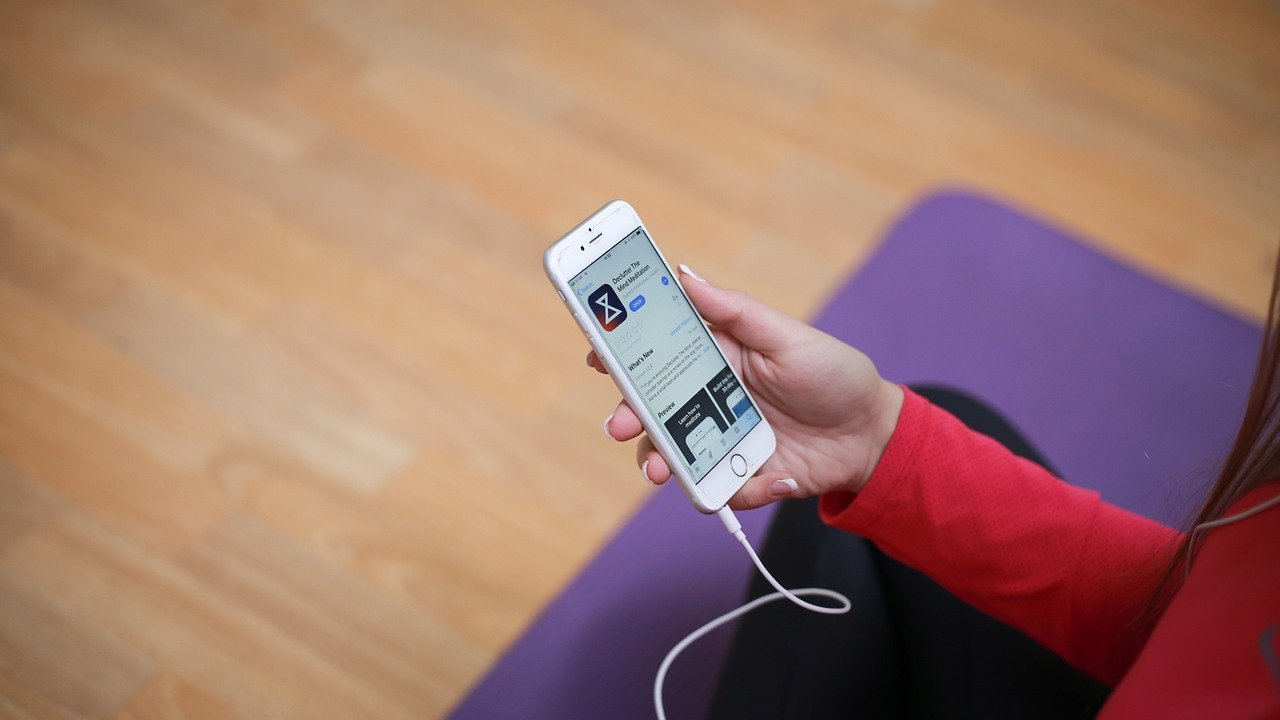
Which means that for most people reading this, the question is not ten minutes versus twenty. It is ten minutes versus nothing — and the reasons people land on nothing have very little to do with how long the session was supposed to be. We went through those reasons, and the numbers behind them, in why beginners quit meditation.
So how long should you meditate?
- Weeks 1–4: five to ten minutes, same slot every day. Optimise for not missing days, not for depth. Nothing in the evidence says a longer beginner session buys you more, and plenty of it says frequency is where the signal is. A beginner’s guide is all the technique you need.
- Judge it at eight weeks, not four. This is the single most actionable finding here. The one trial that measured both timepoints found nothing at four weeks and clear changes at eight, on an unchanged dose.
- Add minutes only once the decision has stopped being a decision. If you are still negotiating with yourself each morning about whether to sit, adding length is the wrong lever. Habits take longer to become automatic than most people expect — roughly 66 days on the best available estimate.
- If you want what the research measured, expect 20–45 minutes daily and think in months. That is the honest version. It is also a completely different commitment from the one most people are making, and it is worth being clear with yourself about which one you are actually signing up for.
- On a bad day, do two minutes rather than nothing. Frequency is the variable with the better evidence, and a two-minute sit keeps the streak — and the habit — intact. Skipping does neither.
- Don’t add length to fix a distracted session. A wandering mind is not a sign you undercooked the dose; it is what the practice consists of. Sitting for longer while frustrated is a good way to end up in the 90% who quit in week one.
If mornings are your slot, we looked at whether the timing itself matters in morning meditation: does the morning part actually matter? — and at what the practice is actually good for in the benefits of meditation.
Frequently asked questions
Five to ten minutes, every day, for the first month or two. There is no evidence that a longer beginner session buys you more: in a 372-person randomised experiment, 20 minutes produced no better results than 10, and a separate trial found that a repeated 5-minute practice actually outperformed a repeated 20-minute one on trait mindfulness and stress. Frequency is the variable with the stronger evidence behind it, so build the daily habit first and worry about length later.
Enough to build a habit, yes, and that is the point of it. Whether 5 minutes is enough to produce the outcomes researchers measure is genuinely unsettled: no minimum effective dose of meditation has ever been established. One randomised experiment found repeated 5-minute practice beat repeated 20-minute practice on trait mindfulness and stress, most likely because people completed the short version more reliably. Treat 5 minutes as a real starting dose rather than a compromise.
For a single session, 10 minutes performed just as well as 20 on state mindfulness and affect in a 372-person randomised experiment. Over a longer run, 13 minutes a day produced measurable improvements in mood, attention and memory in new meditators after 8 weeks. So 10 minutes a day, kept up daily for a couple of months, is a defensible dose. What it will not do is match the 35 to 80 minutes a day associated with meaningful change in the largest prospective dose study.
Weeks, and probably about eight of them. The clearest evidence comes from a trial that measured the same participants at both four weeks and eight: on an unchanged dose of 13 minutes a day, there were no significant changes at four weeks and clear improvements in mood, anxiety, attention and working memory at eight. If you are two or three weeks in and feeling nothing, that is the expected result rather than a sign the practice is failing.
Nobody has tested split sessions against a single session directly, so this cannot be answered cleanly. What is known is that in a two-month study of 1,053 meditators, practice frequency predicted benefit more strongly than session duration did. That points towards the two shorter sessions, and towards spreading practice across more days of the week rather than concentrating it. Treat it as the better bet rather than a proven answer.
Aim for every day, and treat six as the realistic floor. Mindfulness-based stress reduction courses ask for practice six days a week, and participants across 43 studies completed about 64 percent of what they were assigned, which worked out at roughly 30 minutes a day on six days. Since practice frequency is the stronger predictor of benefit, a short sit on six or seven days beats a long one on two.
No upper limit has been established, and for ordinary daily practice this is not the risk people imagine. The finding worth knowing is a different one: in a survey of 1,232 regular meditators published in PLOS One (Schlosser and colleagues, 2019), 25.6 percent reported a particularly unpleasant meditation-related experience, and a second survey of 1,370 people in BJPsych Open reported 22 percent. Unpleasant experiences are more common in intensive practice, so if a longer sitting consistently leaves you worse than you started, that is a reason to shorten it rather than push through.
Hundreds of hours, on the only estimate anyone has produced. A study of 1,668 meditators put the accumulated practice associated with a clinically meaningful change at roughly 424 hours for psychological distress and up to 811 hours for negative affect, with the association strongest over the first 500 hours or so before plateauing. At 10 minutes a day that is about seven years; at 30 minutes a day, a little over two. The early hours are the productive ones, which is the encouraging half of that finding.
More on building a practice that lasts in Meditation.